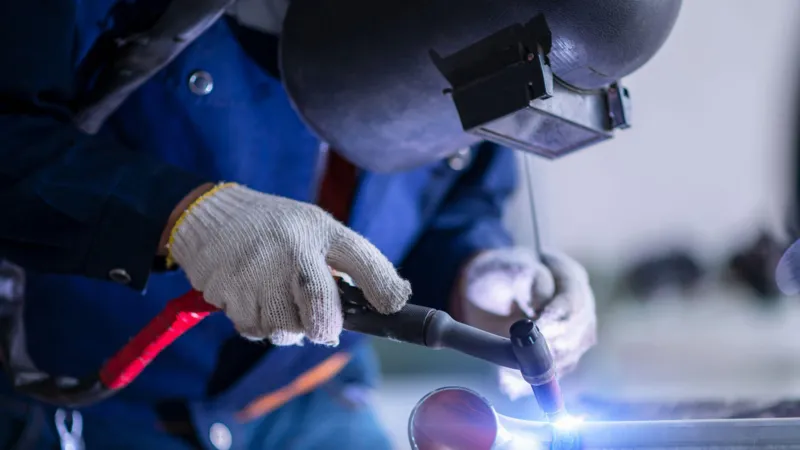
Welding fumes safety breach concerns have left staff at a Glasgow college anxious about their health after an investigation found ventilation systems were not used correctly during welding demonstrations.
The issue was identified at City of Glasgow College’s Riverside campus following an inspection by the Health and Safety Executive.
What was the welding fumes safety breach?
The investigation into the welding fumes safety breach found that although the college had installed local exhaust ventilation (LEV) systems to control hazardous fumes, some lecturers had not received proper training on how to position and operate the equipment correctly.
As part of the welding fumes safety breach investigation, the HSE report found that welding demonstrations had been carried out in open workshop areas without proper ventilation in place. It also stated that college management had not been aware that this unsafe practice was taking place.
According to the findings, welding should only have been carried out inside dedicated welding booths with ventilation in operation.
Health risks linked to welding fumes
The HSE warned that welding fumes carry both short-term and long-term health risks. These include lung cancer, respiratory problems, and skin and eye conditions.
While it is not clear whether any staff have suffered direct health effects, several employees say they are worried about possible long-term consequences.
Staff fears and union concerns
Some staff members say they feel anxious about their health and that of their students. They have raised concerns about the potential future impact of exposure to welding fumes.
The Educational Institute of Scotland (EIS) and its Further Education Lecturers’ Association branch have entered into a formal dispute with the college over safety standards.
Union representatives have called for respiratory protective equipment (RPE) to be provided for both staff and students, even though it is not legally required if ventilation systems are used correctly.
HSE findings and actions taken
The welding fumes safety breach investigation concluded that ventilation systems are sufficient when properly used. However, inspectors advised the college to consider additional protective equipment and update risk assessments to clearly identify welding fumes as a carcinogen.
The report also recommended improvements in housekeeping practices to prevent dust exposure.
Following the inspection, the college confirmed that corrective actions were taken and that it is now fully compliant with health and safety requirements. The HSE has stated that the matter is closed.
Current situation at the campus
Welding activities at the Riverside campus were temporarily paused after the inspection. The college has since been cleared to resume training, although union representatives continue to raise concerns.
The college maintains that independent reviews have found exposure levels to be below regulatory limits.
A wider workplace safety message
The case highlights the importance of proper training, risk assessment and ventilation controls in educational and industrial settings. Welding fumes are recognised as hazardous, and safety authorities stress that strict compliance with safety systems is essential to protect both staff and students.
Incidents involving a welding fumes safety breach highlight the importance of strong occupational health standards and proper staff training. Organisations such as OSH Association focus on promoting workplace safety awareness, hazard control, and risk prevention across education and industry sectors. Clear guidance and consistent safety practices are essential to protect workers and students from avoidable health risks.
Our Latest News
- Rare Fungus Found in UK Forest: 5 Fascinating Discoveries That Highlight Hidden Nature Treasures
- Langerhans Cell Histiocytosis in Children: 5 Shocking Signs Every Parent Should Never Ignore
- Construction Site Fall Accident: Firm Hit with Shocking £40K Fine After Fatal London Incident
- 7 Breakthrough Facts About Hay Fever Immunotherapy – Hope for Allergy Relief but Challenges Remain
- 7 Important Home Worker Safety Rules Employers Must Follow – Legal Duties and Hidden Risks Explained