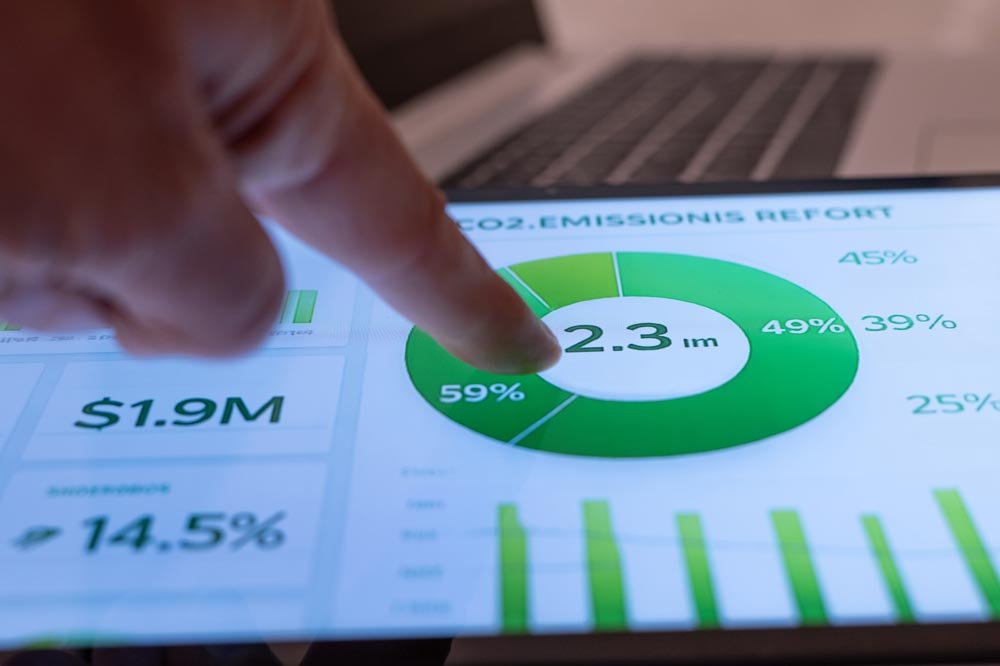
Many corporate carbon reports significantly underestimate emissions linked to global supply chains, according to new research led by Stanford University. The findings highlight major gaps in how companies calculate and report their carbon footprints, particularly emissions generated outside their home countries.
The study shows that commonly used accounting models fail to reflect the true scale of emissions produced across international supply chains, limiting the effectiveness of corporate climate strategies.
Why Supply Chain Emissions Are Being Undercounted
The research, published in Nature Communications, found that many companies rely on statistical models that assume suppliers operate entirely within the United States. This approach ignores the reality that modern supply chains are global.
Professor Steve Davis, the study’s lead author, explained that many corporate carbon reports are misleading because they assume suppliers operate domestically. When emissions are instead calculated using regional data that reflects where suppliers actually produce goods, total emissions figures rise significantly, revealing a much larger carbon footprint than previously reported.
Billions of Tonnes Missing From Carbon Accounts
By comparing single-region US models with multi-region global models, researchers found that many corporate carbon reports failed to account for around 2 billion tonnes of emissions in 2023, equivalent to roughly 10% of the supply chain emissions linked to more than 400 major companies.
The missing emissions are roughly equivalent to the annual carbon output of Russia or India, underlining the scale of the problem.
High-Risk Sectors and Regional Impacts
The largest gaps were identified in energy-intensive industries, including:
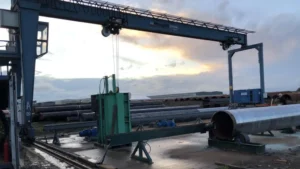
- Steel and concrete production
- Construction machinery
- Automotive and infrastructure metals
- Electronic components
Nearly one billion tonnes of the uncounted emissions identified in corporate carbon reports were linked to suppliers in China, where electricity generation remains heavily dependent on coal. Emissions were also significantly underestimated for goods sourced from Russia and other regions with high reliance on fossil fuels.
Why This Matters for Businesses
Companies relying on inaccurate corporate carbon reports may fail to identify cost-effective ways to cut emissions. The study suggests that sourcing materials from countries with cleaner energy systems, such as France, Brazil or the US, could reduce both emissions and long-term costs.
This issue is becoming increasingly urgent as Europe expands its carbon border adjustment mechanisms, which raise costs for high-emission imports such as steel, aluminium and cement.
Better Data, Better Decisions
To address these shortcomings, researchers are working to make global emissions models more accessible. A new open-source initiative, known as Cornerstone, aims to combine former government datasets with advanced multi-region models developed by climate analytics firm Watershed.
The goal is to provide companies with practical tools that accurately reflect real-world supply chains, helping them make informed sustainability decisions.
Tackling Greenwashing and Improving Transparency
Experts involved in the study, including contributors from environmental organisations, emphasise that better models reduce the risk of greenwashing. When international emissions are excluded, corporate climate claims can appear stronger than they truly are.
Although some critics argue that spending-based models are imperfect, researchers agree that improving existing tools is essential until more detailed supplier-level data becomes available.
The Path Forward for Corporate Climate Action
Companies play a crucial role in reducing global emissions through their purchasing power and investment decisions. More accurate corporate carbon reports allow businesses to target the most carbon-intensive areas of their supply chains and direct funding where it will have the greatest impact.
Improving emissions accounting is not just about compliance, but about ensuring climate action delivers real, measurable benefits for the environment.
Health, Safety and Environmental Responsibility
Reliable environmental reporting supports broader occupational health, safety and sustainability goals. Platforms such as OSHAssociation.org highlight the importance of accurate risk assessment, transparency and prevention across environmental and workplace safety practices, reinforcing the link between climate responsibility and long-term public wellbeing.
🔹 FAQs
Why are corporate carbon reports inaccurate?
Many reports rely on models that assume domestic supply chains, ignoring emissions from overseas suppliers.
How much emissions are being missed?
Research suggests around 2 billion tonnes of supply chain emissions were underestimated in 2023.
Which industries are most affected?
Energy-intensive sectors such as steel, construction, automotive manufacturing and electronics.
How can companies fix this problem?
By using multi-region emissions models and improving access to global supply chain data.