Health and Safety in Motor Vehicle Repair is not just a legal requirement — it is a life-saving responsibility. Workshops across the UK deal with heavy vehicles, hazardous chemicals, dangerous machinery, and high-risk working conditions every single day. Without proper controls in place, routine tasks can quickly turn into serious injuries or long-term health problems.
Health and Safety in Motor Vehicle Repair is especially important because the industry continues to be one of the most dangerous working environments in Britain.
Tasks such as lifting heavy engines, working beneath elevated vehicles, spraying chemicals, and handling fuels expose technicians to serious and ongoing risks if proper safety controls are not in place.
1. The Law Requires Strict Risk Control
Health and Safety in Motor Vehicle Repair is backed by strict UK legislation. Employers and self-employed technicians have a legal duty to safeguard workers and anyone who may be affected by their activities. The Health and Safety Executive is responsible for enforcing these regulations in most vehicle repair workshops across Britain.
Businesses must carry out suitable and sufficient risk assessments. These assessments identify hazards and explain how risks will be controlled in practice. They must be reviewed regularly, especially when equipment, processes, or staff roles change.
Failing to comply can lead to enforcement notices, prosecution, and unlimited fines.
2. Dangerous Chemical Exposure Is a Hidden Threat
One of the most serious concerns in Health and Safety in Motor Vehicle Repair is exposure to hazardous substances.
Solvents, fuels, oils, paints, welding fumes, and especially isocyanate-based spray paints can cause:
- Occupational asthma
- Dermatitis
- Respiratory disease
- Long-term lung damage
As part of Health and Safety in Motor Vehicle Repair, the Control of Substances Hazardous to Health (COSHH) Regulations require employers to properly assess risks and limit workers’ exposure to harmful substances.
This involves installing suitable ventilation systems, following safe handling procedures, providing appropriate protective equipment, and carrying out regular health monitoring to protect long-term wellbeing.
3. Unsafe Vehicle Lifting Can Be Fatal
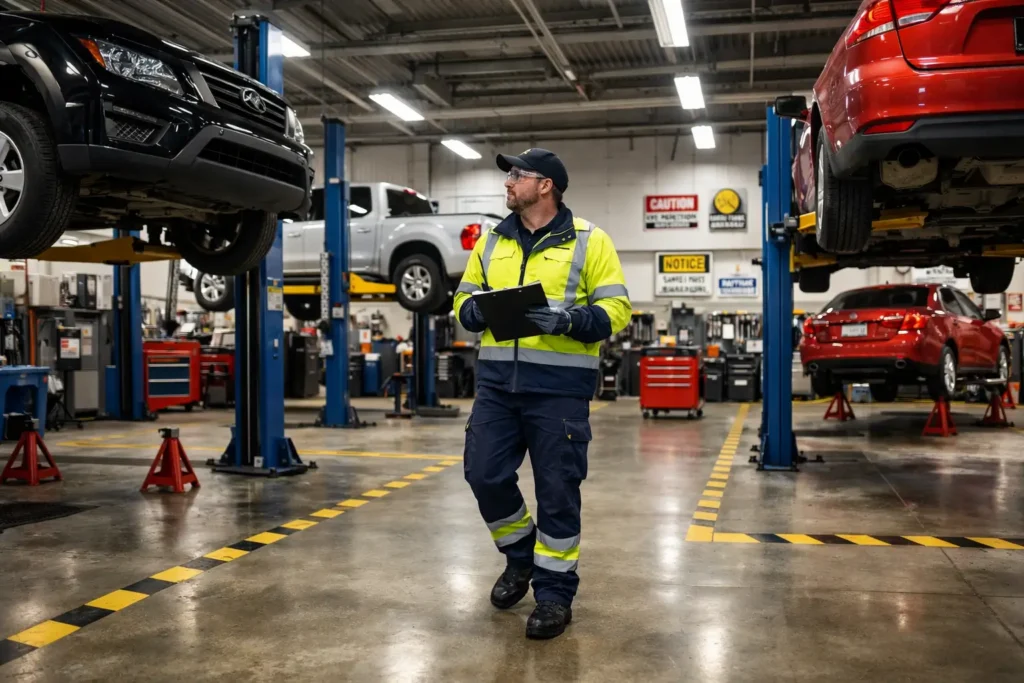
Working beneath vehicles is a normal part of repair work, but it carries severe risk. Serious injuries and fatalities have occurred when vehicles were not properly supported.
Regulations require lifting equipment such as jacks, hoists, and axle stands to be:
- Suitable for the task
- Properly maintained
- Regularly inspected
No technician should ever work under a vehicle supported only by a jack.
4. Manual Handling Causes Long-Term Injury
Within Health and Safety in Motor Vehicle Repair, manual handling remains a major concern. Lifting heavy parts, working in awkward positions, and carrying out repetitive movements can gradually cause musculoskeletal disorders.
Back strain and joint damage often build up over time rather than happening suddenly, which makes early prevention and proper technique absolutely essential.
Proper training, lifting aids, and safe working techniques significantly reduce these risks.
5. Slips, Trips and Workshop Clutter
Oily floors, trailing cables, poor housekeeping, and wet surfaces are common causes of injuries in workshops. While these hazards may seem minor, they frequently result in fractures, sprains, and lost working days.
Simple measures such as good housekeeping and clear walkways make a measurable difference.
6. Equipment Safety Is Non-Negotiable
The Provision and Use of Work Equipment Regulations (PUWER) require businesses to ensure machinery and tools are:
- Suitable for use
- Maintained correctly
- Operated by trained staff
Unsafe or poorly maintained equipment dramatically increases accident risk.
7. HSE Enforcement Is Increasing
In 2025, the Health and Safety Executive launched targeted inspections of more than 1,000 motor vehicle repair businesses across Great Britain. These inspections focused heavily on occupational asthma linked to paint spraying.
This action highlights that Health and Safety in Motor Vehicle Repair is being closely monitored. It is not optional — it is central to running a responsible business.
Practical Safety Measures That Work
Effective safety management includes:
- Regular and updated risk assessments
- Proper ventilation systems
- Suitable respiratory protection when spraying
- Routine inspection of lifting equipment
- Health surveillance and monitoring
- Staff training and clear safety procedures
These measures not only prevent accidents but improve productivity and confidence within the workplace.
Conclusion
Health and Safety in Motor Vehicle Repair is essential for protecting lives, preventing serious illness, and avoiding costly legal consequences. UK regulations set clear standards, and recent enforcement activity shows where the highest risks exist.
By identifying hazards, controlling exposure, maintaining equipment, and training staff properly, repair businesses create safer environments where technicians can work confidently without unnecessary danger.
For organisations seeking further guidance on improving workplace standards, OSHAssociation provides valuable information on occupational safety and health practices.
The platform shares practical insights, compliance guidance, and best-practice advice to help businesses strengthen their safety culture. Resources like these support employers in maintaining safer working environments and staying aligned with current health and safety expectations across the UK and beyond.
Our Latest News
- 4 Chemical Safety Board Chemical Release Reports Explained
- 6 Major Updates on the Luton Town Centre Regeneration Project – Big Opportunities and Past Delays Explained
- 7 Powerful Facts About the Universal Nasal Vaccine That Could End Winter Colds – Hope and Risks Explained
- 7 Powerful Ways Ultra-Processed Foods and Gut Microbiome Health Are Linked — Surprising Benefits and Serious Risks
- 5 Shocking Lessons from a Ride-on Lawnmower Safety Failure That Led to a Preventable Tragedy