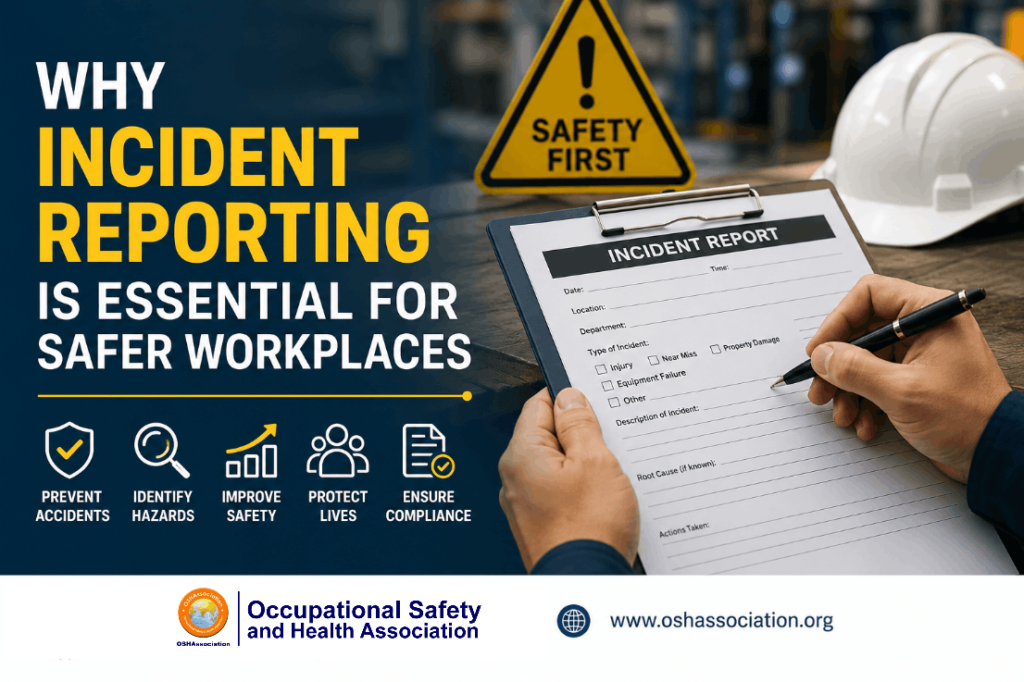
Every workplace incident—whether it results in an injury, property damage, or is simply a near miss—provides valuable information that can help prevent future accidents. Unfortunately, many incidents go unreported because employees fear blame, believe the event is insignificant, or assume someone else will report it.
Effective incident reporting is one of the most important components of a proactive occupational safety and health management system. Organizations that encourage timely and accurate reporting are better equipped to identify hazards, reduce risks, improve compliance, and create safer work environments for everyone.
At OSHAssociation, we believe that every incident is an opportunity to learn, improve, and protect lives.
What Is Incident Reporting?
Incident reporting is the process of documenting any unplanned event that could have caused—or did cause—injury, illness, property damage, environmental harm, equipment failure, or operational disruption.
Incidents include:
- Workplace injuries
- Occupational illnesses
- Near misses
- Unsafe acts
- Unsafe conditions
- Equipment failures
- Chemical spills
- Fire incidents
- Environmental incidents
- Property damage
Reporting these events allows organizations to investigate root causes instead of merely addressing the consequences.
Why Incident Reporting Matters
1. Prevents Future Accidents
Most serious workplace accidents are preceded by warning signs. Near misses and minor incidents often reveal weaknesses in workplace processes, equipment, or safety procedures.
When incidents are reported promptly, organizations can:
- Identify hazards early
- Correct unsafe conditions
- Improve work procedures
- Prevent similar incidents from recurring
A single reported near miss today could prevent a serious injury tomorrow.
2. Strengthens Workplace Safety Culture
Employees are more likely to participate in safety initiatives when they know their concerns are heard and acted upon.
An effective reporting system demonstrates that management values:
- Employee wellbeing
- Transparency
- Continuous improvement
- Open communication
A positive reporting culture focuses on learning rather than assigning blame.
3. Supports Legal and Regulatory Compliance
Many occupational safety regulations require employers to document and investigate workplace incidents.
Proper records help organizations:
- Demonstrate compliance
- Prepare for inspections
- Meet reporting obligations
- Provide evidence during investigations
Maintaining accurate records also protects organizations during insurance claims and legal proceedings.
4. Improves Risk Management
Incident reports provide valuable data for identifying trends.
Organizations can analyze:
- Frequently occurring hazards
- High-risk departments
- Common injury types
- Unsafe behaviors
- Equipment-related failures
These insights enable management to prioritize corrective actions and allocate safety resources more effectively.
5. Reduces Financial Losses
Workplace incidents are expensive.
Costs may include:
- Medical expenses
- Workers’ compensation claims
- Equipment repairs
- Production downtime
- Legal fees
- Regulatory penalties
- Increased insurance premiums
Preventing even one serious incident can save an organization significant financial resources while protecting its workforce.
The Importance of Reporting Near Misses
Near misses are events that could have resulted in injury or damage but did not.
Examples include:
- A worker slips but regains balance.
- A tool falls without striking anyone.
- A forklift narrowly avoids a collision.
- A chemical container leaks without causing exposure.
Many organizations overlook near misses because “nothing happened.”
In reality, near misses are among the most valuable safety indicators because they reveal hazards before someone gets hurt.
Common Barriers to Incident Reporting
Employees may hesitate to report incidents because they:
- Fear punishment
- Worry about being blamed
- Believe reporting takes too much time
- Think the incident is too minor
- Assume someone else has already reported it
Organizations should eliminate these barriers by creating a reporting process that is:
- Simple
- Confidential where appropriate
- Accessible
- Non-punitive
- Encouraged by leadership
Best Practices for Effective Incident Reporting
To maximize the value of incident reporting, organizations should:
- Encourage immediate reporting.
- Investigate every reported incident.
- Focus on identifying root causes rather than blaming individuals.
- Document findings accurately.
- Implement corrective and preventive actions.
- Share lessons learned across the organization.
- Review incident trends regularly.
- Train employees on reporting procedures.
Building a Learning Organization
Successful organizations do not view incident reporting as paperwork—they see it as an investment in continuous improvement.
Each report contributes to:
- Better decision-making
- Improved safety procedures
- Enhanced employee awareness
- Reduced workplace risks
- Stronger organizational resilience
When employees know their reports lead to meaningful improvements, participation naturally increases.
How OSHAssociation Supports Safer Workplaces
Building a strong incident reporting culture requires knowledgeable professionals, effective systems, and ongoing education.
OSHAssociation supports individuals and organizations by providing:
- Occupational safety and health education
- Professional certification programs
- Safety awareness resources
- Workplace safety guidance
- Professional development opportunities for safety practitioners
Whether you are beginning your occupational safety journey or strengthening an existing safety management system, investing in knowledge is one of the most effective ways to reduce workplace risks and improve organizational performance.
Final Thoughts
Incident reporting is far more than an administrative requirement—it is one of the most powerful tools for preventing workplace injuries, protecting employees, and improving organizational performance.
Every reported incident provides an opportunity to identify hazards, learn valuable lessons, and prevent future harm. Organizations that foster an open, blame-free reporting culture are better positioned to build safer, healthier, and more resilient workplaces.
If your organization is committed to advancing workplace safety, professional development, and international best practices in occupational safety and health, visit www.oshassociation.org to explore our certification programs, educational resources, membership opportunities, and latest safety articles. Together, we can promote safer workplaces and save lives.