Workplace accidents rarely happen without warning. In many cases, they are the result of common safety mistakes that are overlooked, repeated, or accepted as normal over time. These mistakes may seem minor at first, but they can quickly lead to serious injuries, lost productivity, legal consequences, and damage to organisational reputation.
Creating a safer workplace requires more than having rules on paper. It involves consistent awareness, proper supervision, practical training, and a strong culture of responsibility at every level. Below are seven common safety mistakes that continue to place workers at risk across different industries.
- Ignoring Hazard Identification
One of the most common safety mistakes is failing to identify hazards before work begins. When risks are not properly assessed, workers may be exposed to unsafe equipment, dangerous substances, poor working conditions, or unsafe work practices without adequate control measures in place.
Hazard identification should be a routine part of operations, not something done only after an incident occurs. Employers and supervisors must regularly inspect the workplace, review tasks, and involve workers in identifying risks before those risks lead to harm.
- Inadequate Training
Workers cannot perform safely if they have not been properly trained. Inadequate training often results in employees using equipment incorrectly, misunderstanding procedures, or reacting poorly in emergencies.
Training should be practical, clear, and relevant to the specific tasks workers perform. It should also be refreshed regularly, especially when new equipment, processes, or responsibilities are introduced. Safety training is not a one-time event; it is a continuous investment in competence and prevention.
- Failure to Use Personal Protective Equipment Properly
Personal Protective Equipment (PPE) plays an important role in reducing workplace injuries, yet many incidents still occur because PPE is not provided, not used correctly, or not enforced consistently.
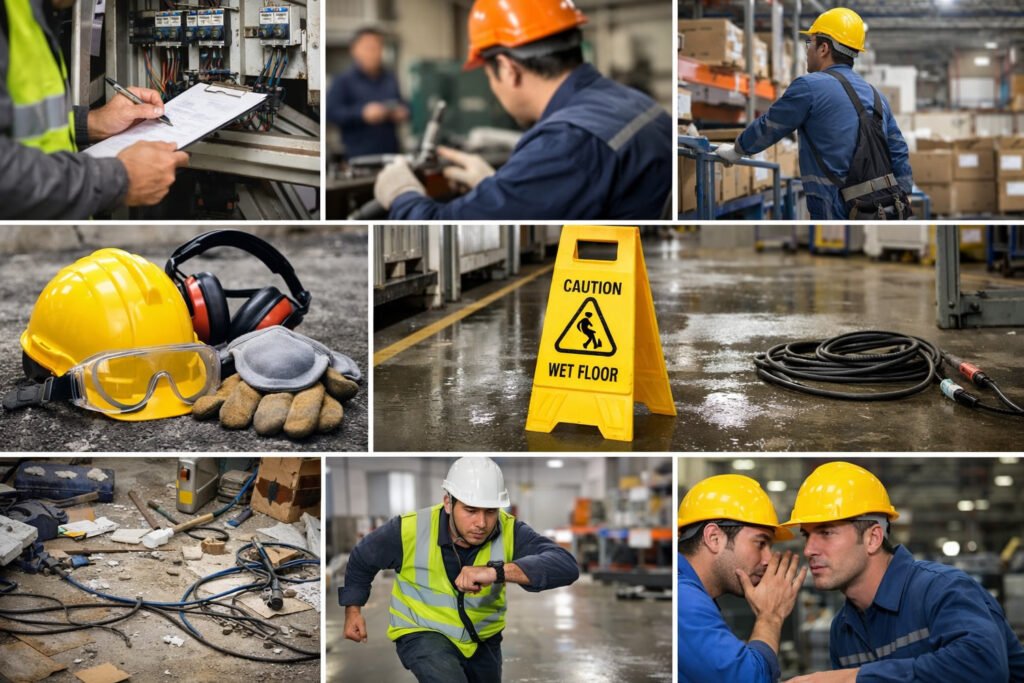
Workers may wear the wrong type of protection, use damaged PPE, or fail to wear it altogether. Employers must ensure that suitable PPE is available, properly fitted, maintained, and matched to the actual hazards present. Workers must also understand that PPE is not optional where it is required.
- Poor Housekeeping
Untidy workplaces create unnecessary risks. Spilled liquids, blocked walkways, exposed cables, scattered tools, and poor storage practices can all lead to slips, trips, falls, and other preventable incidents.
Good housekeeping is one of the simplest and most effective safety measures any organisation can implement. A clean and organised workplace not only reduces risk but also improves efficiency, morale, and professional standards.
- Weak Supervision and Enforcement
Even where safety procedures exist, weak supervision can allow unsafe behaviour to continue unchecked. When supervisors fail to monitor compliance, correct unsafe actions, or address repeated violations, workers may begin to assume that safety rules are not important.
Strong supervision is essential for maintaining standards. Leaders and supervisors must set the example, reinforce safe behaviour, and take immediate action where unsafe practices are observed. Safety culture becomes stronger when management demonstrates visible commitment.
- Rushing the Job
Pressure to meet deadlines, save time, or increase output often leads workers to take shortcuts. They may skip safety checks, bypass procedures, or use tools in unsafe ways in an effort to finish quickly.
Rushing is a serious risk factor in many workplace incidents. No job should be done so quickly that safety is compromised. Organisations must create an environment where workers are encouraged to take the time needed to do tasks correctly and safely.
- Failing to Report Near Misses and Unsafe Conditions
Many organisations focus only on actual accidents, while ignoring near misses and warning signs. This is a major mistake. Near misses provide valuable information about weaknesses in systems, equipment, behaviour, or procedures.
When unsafe conditions and near misses are reported early, corrective action can be taken before someone gets hurt. Workers should feel confident reporting concerns without fear of blame or punishment. A proactive reporting culture is a vital part of effective safety management.
Why These Mistakes Matter
These common safety mistakes can affect any workplace, regardless of size or sector. Whether in construction, manufacturing, offices, healthcare, logistics, or training environments, the consequences of poor safety practices can be severe.
Reducing risk requires more than compliance. It demands planning, accountability, communication, and a genuine commitment to protecting people. Organisations that take safety seriously are better positioned to prevent incidents, support productivity, and build trust with workers and stakeholders.
Final Thoughts
A safer workplace is built through attention to detail, continuous improvement, and the willingness to address unsafe habits before they cause harm. By recognising and correcting these seven common mistakes, organisations can significantly reduce risk and create a stronger culture of prevention.
At OSHAssociation, we remain committed to advancing professional safety awareness, practical workplace protection, and continuous learning across industries.
OSHAssociation
Promoting Safety, Saving Lives.
Visit: www.oshassociation.org